I spent forty minutes this morning chasing a note of jasmine in a light roast, only to realize I was just drinking expensive battery acid. People act like dialling in a new bag of beans requires a degree in chemistry and a laboratory-grade scale. They tell you to track every gram of water and every degree of temperature like it’s a holy ritual. Honestly? Most of that is just noise. I’ve seen guys spend hundreds on high-end grinders only to end up with a cup that tastes exactly like the cheap stuff they used last week.
I’m not here to sell you on a new piece of gear or a complicated spreadsheet. This week, I sat in my kitchen and actually worked through the process with a tricky anaerobic process bean. I’ll tell you what actually moved the needle and what was a complete waste of my time. My goal is simple: I want to show you how to find the sweet spot without turning your morning routine into a second job. If a change didn’t make the coffee taste better, I’m telling you.
The 40 Bag That Refused to Cooperate Dialling in a New Bag of Beans
I picked up a bag of washed Ethiopians from a local roaster last Tuesday. Forty dollars for 250 grams. It promised jasmine and peach, but the first shot I pulled tasted like a battery. I tried a standard espresso grind size adjustment, moving two notches finer on my old hand grinder, but the acidity was still biting and sharp. It felt like I was drinking lemon juice with a caffeine kick.
I went through the motions. I checked my scale, adjusted my dose, and even messed with the water temperature and extraction by letting my kettle sit for an extra minute. I was looking for that sweet spot where the fruit notes actually show up, rather than just stinging the tongue.
Honestly? It took four tries before the peach finally emerged. I realized I was being too aggressive with the grind. Once I backed off, the cup finally stopped fighting me. It wasn’t a miracle, and the expensive beans didn’t suddenly become perfect, but at least I could actually taste the fruit without squinting.
Ignoring the Hype Why the Roast Profile Impacted Everything
I spent the better part of Tuesday reading forums about “optimal extraction” for this specific lot. Everyone was arguing about whether a lighter roast needs a higher water temperature and extraction to avoid that hollow, salty sensation. I ignored them. I just looked at the bag. The roast date was three weeks ago, and the beans looked dense, almost oily in a way that usually screams “medium-dark.”
I realized my mistake was treating this like the light, acidic Ethiopian I had last week. You can’t just use the same settings and expect magic. I had to pivot my entire approach to account for the coffee bean roast profile impact. When the roast is deeper, the structure changes. The cell walls are more porous. If I kept chasing that bright, citrusy acidity, I was just going to end up with a bitter, burnt mess.
I stopped obsessing over the math and focused on the tasting notes and acidity balance. I backed off the heat and loosened the grind slightly. It wasn’t about following a recipe; it was about realizing the beans were telling me they were already “done” more than my usual light roasts.
Chasing the Ghost Espresso Grind Size Adjustment That Failed
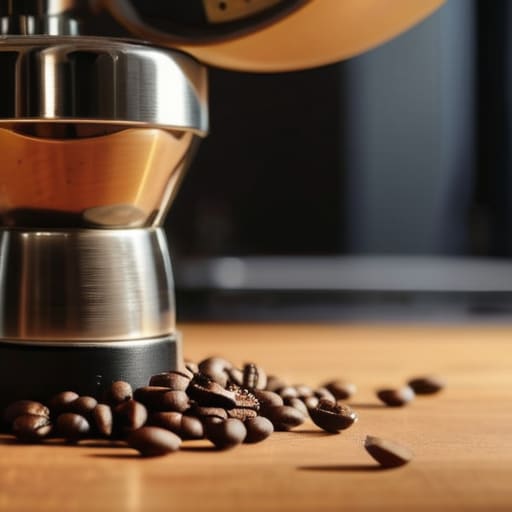
I decided to go the espresso route. I thought, if the pour-over was being difficult, surely the pressure of a machine would force some flavor out of these beans. I spent the better part of an hour performing a frantic espresso grind size adjustment, moving the collar by tiny, microscopic increments. I was looking for that sweet spot where the acidity softens into something syrupy. Instead, I just kept hitting a wall of bitterness.
I tried tweaking the brew ratio for espresso, moving from 1:2 to 1:2.5 to see if more water would help. It didn’t. I even messed with the water temperature and extraction, heating the machine up until it felt like a sauna. Nothing worked. The tasting notes and acidity balance remained stuck in a weird, metallic limbo that no amount of fine-tuning could fix. It turns out, some beans just don’t want to be espresso. I eventually gave up, cleaned my portafilter, and went back to the V60. At least the drip brewer doesn’t pretend to be more complicated than it actually is.
The Math Didnt Matter Finding the Perfect Brew Ratio for Espresso
I sat there with my notebook, trying to be the scientist. I had the scale out, calculating every gram, convinced that a precise brew ratio for espresso would be the silver bullet. I moved from a 1:2 ratio to a 1:2.5, thinking more liquid would surely fix that hollow, thin feeling in the middle of the shot. I was chasing a mathematical perfection that didn’t exist in my kitchen.
The truth is, the numbers were just noise. I spent an hour tweaking the output, obsessing over tasting notes and acidity balance, but the shot stayed stubbornly sharp. It wasn’t about the math. I finally stopped calculating and just started pulling shots by feel, adjusting the dose slightly until the texture felt right. It turns out, my brain understood the coffee better than my calculator did. I finally hit a sweet spot that felt balanced, and it had nothing to do with the spreadsheets I’d been staring at.
Fighting Sourness Water Temperature and Extraction Realities
I thought I had it. The grind was dialed, the ratio was set, but the cup was still hitting me with a sharp, unpleasant brightness. It wasn’t a pleasant citrus; it was just sour. I started obsessing over water temperature and extraction, thinking I needed to crank the machine up to 96°C to force some sweetness out of these beans. I even went through the ritual of letting the machine heat up for an extra ten minutes, just to be sure.
I tried the higher heat. I tried a slightly finer grind. I even tried a different bean entirely for a moment just to reset my palate. But the reality was frustratingly simple. No matter how much I tweaked the temperature, that stinging acidity remained. It turns out that when you’re dealing with a specific tasting notes and acidity balance, sometimes the beans simply refuse to play by the rules of thermodynamics. I realized I wasn’t fighting the water; I was fighting the roast itself. Some beans just want to be bright, and no amount of heat is going to turn them into a chocolatey espresso.
Beyond the Numbers Tasting Notes and Acidity Balance Found
Eventually, I stopped looking at my notebook and just started listening to my mouth. I stopped obsessing over the grams and the seconds. I realized that chasing a perfect mathematical extraction yield optimization is a trap if you aren’t actually tasting the fruit. The Ethiopian beans finally started to sing, not because I hit a specific number, but because the harsh, metallic bite had finally softened into something resembling jasmine and lemon.
It wasn’t a sudden breakthrough. It was a slow realization that the tasting notes and acidity balance I wanted were hiding behind a wall of over-extraction. I had been trying to force the sweetness out by grinding finer, but that just made the cup muddy. Once I backed off the grind and let the water flow a bit faster, the clarity returned. It turns out, the sweet spot wasn’t in the math; it was in finding that delicate tension where the acidity feels bright rather than sharp. I finally stopped fighting the bean and just let it brew.
The Truth About Coffee Extraction Yield Optimization This Week
I spent the better part of Tuesday morning reading articles about coffee extraction yield optimization, trying to find that mathematical sweet spot where every single flavor molecule is perfectly accounted for. I even pulled out my refractometer, thinking if I could just see the number, I could fix the cup. But here is the reality: the machine gave me a beautiful reading, yet the coffee still tasted thin and hollow.
It turns out that chasing a specific percentage on a screen is a trap. I realized that all the math in the world doesn’t matter if you aren’t actually listening to the liquid. I stopped worrying about the theoretical yield and went back to my senses. I adjusted my technique, focused on the flow, and finally found a balance that actually made sense to my palate. Sometimes, the best way to optimize a brew isn’t through a spreadsheet, but by simply trusting that your tongue is a better tool than a digital sensor. If it tastes good, it is optimized. Period.
The Final Sip
After a week of fighting with my grinder, tweaking the temperature, and ignoring the math that didn’t actually make the coffee taste better, I finally stopped. I realized that the expensive gear and the precise extraction yields were mostly just background noise. The real work happened when I stopped looking at the scale and started actually tasting the liquid. The roast profile dictated the direction, the grind size fixed the body, and the water temperature finally tamed that aggressive acidity. It turns out, dialling in isn’t a math problem; it’s just a series of small, frustrating adjustments until the cup finally stops fighting you and starts rewarding you.
At the end of the day, don’t let the obsession with precision ruin your morning. I’ve spent way too many hours chasing a “perfect” number only to realize the coffee was already delicious ten minutes earlier. Buy the good beans, find a rhythm that works for your kitchen, and remember that the goal is to drink the coffee, not just study it. If the cup tastes good, you won. Everything else is just extra work you don’t really need.